Showing posts with label Nottinghamshire. Show all posts

Wednesday, 11 April 2012

There's life in the Library yet

West Bridgford Library about 1939
The 1st March 2012 was 'World Book day', and something special was happening in West Bridgford. We were going to get an improved library.

My eldest son started his library career stamping books behind the counter, and has now reached the prestigious position of Director of Senate House Libraries at the University of London.

In his view, (which is also the view of others who have been in library services for a long time) they have always had to live with the question of the future of libraries, and their potential imminent demise. There are certainly many articles on-line which over the past twenty years have been discussing these matters. But like Mark Twain, after hearing that his obituary had been published in the New York Journal, libraries could say that, "The reports of my death are greatly exaggerated".

Nottinghamshire County Council is one of the largest education authorities in the country, and in addition to supporting 358 schools, it runs over 60 libraries as well as seven mobile libraries.

In the Borough of Rushcliffe, there are nine key libraries, of which one is the West Bridgford Library. Work has started on a major £5.3 million re-development programme, which by the Spring of 2013 will see a vastly improved library service, and a brand new young people's centre. It was on the 1st March 2012 that the turf-cutting ceremony took place. According to the County Council's web site, "The flagship West Bridgford library development is the latest in the county council's plan to continue to invest, develop and remodel its existing libraries to be able to continue to serve traditional library users and meet the demand for digital services and reach out to new audiences".

There is sound judgement here in recognising that traditional users are important; that digital services are part of the present, and that libraries will only flourish in the future if they attract new audiences. The current library building was built in 1938 or 1939 (depending on who you read), which makes it contemporary with The Test Match pub. (Irrelevant I know, but it's my local, so it's worth a mention). I was so pleased to see that the new service will retain the original building, while having a brand new, modern young people's centre built on the back of it. From the sketches that are available, the two designs seem to fit well together. Too many fine historic buildings have been lost in Nottingham over the years, so it is a tribute to the county planners that they have kept this fine 1930's building. If I sound like Prince Charles I don't care; I believe it.

In reading blog comments elsewhere, some people seem to be afraid that new library space will be taken up with children's areas, DVD's, CD's and computers, leaving less space for actual physical books. If this was the case, I too would be concerned.

However, at West Bridgford we are promised "two floors filled with books". Yes there will also be a dedicated children's area as well as increased "free use of computers, internet and wi-fi". 

In addition there will be a new Shopmobility service, and the Registrar's Office will move from Bridgford Hall into the building. In keeping with the requirements of the Disability Discrimination Act, the whole building will be fully accessible.

I like the sound of it, and it will bring people in through the doors for a range of reasons, which will help to legitimise its presence. Throughput (or footfall) is everything, and it is not inconceivable to think of people coming in for Shopmobility or the Registrar, who also find themselves viewing the books.

I also think that it's very creative to build a modern two-story young people's centre at the rear of the present building. The Council say that this will include:

  • a fantastic meeting place
  • recording studio
  • performance area
  • dance area
The strapline for Rushcliffe Borough Council is, "Great Place - Great Lifestyle - Great Sport". While this may border on hyperbole, the new young people's centre will be a great place for West Bridgford's creative young people to develop and showcase their talents.  

I've been critical of Council in the past, and I stand by that, but credit where credit is due. The re-developed site on Bridgford Road is very exciting, and shows that there's life in the library yet. It's down to us residents to make sure that we use it. I for one have my library card at the ready.

Tuesday, 10 April 2012

No-touching Physiotherapy


Just when you began to think that ideas couldn't get any barmier, along comes health commissioners in Rushcliffe. It seems that NHS patients will no longer get hands-on treatment, but will simply be given "advice and guidance". The aim, according to health commissioners is to help patients to "self manage their condition ... and to take control of their condition and get better quicker". 

Let's have a look at the background here. In the Government's Health and Social Care Bill, Clinical Commissioning Groups will take over from all Primary Care Trusts in April 2013.

Nottinghamshire is ahead of the Government's timetable, and has already devolved budgets to new groups. In the Borough of Rushcliffe, which is where I live, the new clinical commissioning group is called Principia, and is responsible for planning and buying healthcare services in the Borough.

This group are responsible for the no-touching rule for physiotherapy. A spokesperson said that the change in service had not been a cost-cutting measure, and that "costs were broadly the same as before". Now call me cynical if you like, but I don't believe it, and what the hell does "broadly the same" mean anyway?

There's no more of this
Today's Nottingham Post says, "For many patients suffering from chronic back, neck or joint pain, physiotherapy is an essential step on the road to recovery". Statistically, 80% of the population suffer from lower back pain at some stage in their lives, which if applied to Rushcliffe gives a figure of over 96,000 patients.

Previously under the NHS in Rushcliffe, if you had problems, you were offered one assessment and up to four treatments for physiotherapy. The clinical commissioning group has reviewed its services, and changed from being a treatment service to an advice and guidance service. As the Post says, "This means the physiotherapists are no longer allowed to touch patients, and instead give advice on what exercises they should be doing and information on how to manage their condition themselves".

Even before you can get a referral to a physiotherapist, you have to visit your GP on two occasions, six weeks apart. If you can navigate that hurdle, all patients in Rushcliffe can expect is a maximum of two physiotherapy appointments a year, and that for advice and guidance.

Following a survey of all Primary Care Trusts in the country, The Chartered Society of Physiotherapy has said that Principia was the only group not to offer a hands-on treatment to physiotherapy patients.  Commenting on the new service, the Society's Chief Executive said, "They seem to have invented a new form of physiotherapy that no one has heard of - do-not-touch physiotherapy". Patient's group are equally concerned about the new service. A spokesperson for the Local Improvement Network in Nottinghamshire said, "I think it is just awful. If you need physiotherapy, you need the treatment, not just advice". 

As someone who suffers from back pain, and has benefited over the years from physiotherapy treatment, I share the concern of many at the withdrawal of hands-on services. Even after getting advice, not everyone is in a position to access online information, and many people need practical demonstrations to ensure that they are doing physiotherapy exercises correctly. My treatment was private as I could afford to pay for it; I can though no longer afford to pay around £40 - £50 for a thirty minute session, and I expect many other people are in the same boat. So, many residents in Rushcliffe who cannot afford to pay for treatment (yes, even in this affluent Borough, there are those struggling with cash flow), knowing that there is no hands-on treatment available on the NHS for them, will probably not do anything, except suffer.

Commenting on the new service of advice and guidance instead of hands-on treatment, The Chartered Society of Physiotherapists said, "It is a completely barmy form of treating people". I agree, and I hope that the day will come when the clinical commissioning group will reverse the decision and allow the residents of Rushcliffe to receive hands-on physiotherapy treatment when they need it.

Tuesday, 19 July 2011

Farndon, Friendship and Favourites

The Riverside pub and kitchen
What's one of your favourite words? A bit of a silly question really, because it all depends on the context. I like the word 'friend', as it speaks of common likes and dislikes, and enjoyment of another's company.

It's extremely pleasant when you can feel that you have made a new friend. Tony and I have been blogging for about the same length of time, and found that we have many views in common. He also lives around Nottingham, and after a few months of communication, we decided that it would be good to meet up.

What better way to do this than to meet for a pint and a sandwich at some country venue. For me, it turned out to be a more than pleasant few hours. We drove down the A46 out of Nottingham towards Newark, and stopped at the village of Farndon. I'm sure that there are more modern descriptions of the village, but I like the one given in John Wilson's Imperial Gazetteer of England and Wales of 1870-1872.

"Farndon, a parish in Newark district, Notts; on the River Trent and the Fosse Way, near the Newark and Nottingham railway, 2 miles SW by W of Newark. It has a post office under Newark, Acres 1,710. Real property, £5,915. Pop. 692. Houses 152. Many of the inhabitants are stocking makers. The church is good, and there are chapels for Wesleyans and Primitive Methodists".

The Fosse Way
The A46 running past Farndon is also known as the historic Roman Road, The Fosse Way.

This is probably one of the most famous Roman Roads in the country, that linked Exeter in the South West to Lincoln. You may not share my fascination for this road, but to me it is remarkable for its extremely direct route. From Lincoln to Ilchester in Somerset, a distance of 182 miles, it is never more than 6 miles from a straight line. Having travelled through much of England, I can't help wishing that subsequent civil engineers had copied the brilliance of the Romans.

For the purists among you, and I know how much you love details, I quote the following. "The word Fosse is derived from the Latin fossa, meaning ditch. For the first few decades after the Roman invasion of Britain in AD 43, the Fosse Way marked the western frontier of Roman rule in Iron Age Britain. It is possible that the road began as a defensive ditch that was later filled in and converted into a road, or possibly a defensive ditch ran alongside the road for at least some of its length". Interesting or what?

The River Trent
It's this road that Tony and I travelled on to the village of Farndon, and The Riverside pub and kitchen. The pub sits by the side of the River Trent, with the sugar beet factory in Newark seen in the distance.

The Riverside pub was formally known as the Britannia Inn, which was originally built in 1763, and was a favourite stopping place for the Trent barge operators.

It has undergone extensive and beautiful restoration, along with the name change. Any place that sells 'Old Speckled Hen' beer is OK by me, and we enjoyed the beer and sandwich in very comfortable surroundings. I really do sound like a reviewer, don't I, but I want you to get a feel for the place, and you can learn more here.

Landing Stage
Opposite the pub, until recent years, there used to be a ferry across the Trent from Farndon to Rolleston. It is now a landing jetty for pleasure craft, taking people up and down the Trent on trips.

I liked this newspaper story from August 1948 which said, "The title of Little Hero of Farndon was bestowed on 12-year old Ronnie Ward, after he rescued a child from the river by the Farndon Ferry on Thursday. Seeing the four year old boy in deep water, Ronnie swam out to him and pulled him to the landing stage from where he was carried back to his mother. Amazingly, Ronnie's parents knew nothing about the rescue until they heard the story from eye-witnesses, because their son was too modest to tell them". You really can't beat a good human interest story.

Mark Ainsworth 1963
Before we had our lunch, and in case it started to rain later, Tony and I went for a short walk along the banks of the Trent, and then a circular walk around the fishing lake.

The walk was flat, and all done in about 20 minutes. It started and finished by the Farndon Marina, which is a joy to behold, and far more picturesque than many other Marina's that I've seen.

To show how the Marina started, I can do no better than quote from the Marina website, history page. "It was a cold day in 1963 when Mark Ainsworth, a passionate sailor and a man with a vision, discovered the old gravel pits at Farndon, near Newark. Mr Ainsworth managed to purchase the 25 acre site which was owned by a local firm of architects in 1964. Thus began the creation of Farndon Marina". It's still a family run business today, and is very impressive to look at.

Farndon Marina
It was just as well that Tony and I went for a walk before lunch, because after it, it started to rain. We were out less than three hours, but in that time I experienced many of the things that I love: friendship, pubs, food, rivers, lakes and marina's. So much enjoyment in so little time. Life at times is very sweet.

"Life is full of surprises and serendipity. Being open to unexpected turns in the road is an important part of success. If you try to plan every step, you may miss those wonderful twists and turns. Just find your next adventure - do it well, enjoy it - and then, not now, think about what comes next". Condoleeza Rice

Wednesday, 18 May 2011

Carthusian Martyrs

Beauvale Priory (Monastery), Nottinghamshire
During the reign of Henry VIII in the 1530's, we have a story of power struggle, machiavellian politics, lust, greed, intimidation and death. The central players are Henry VIII, Thomas Cromwell and 18 Carthusian Monks. The Carthusian Order near Grenoble in France was eventually filmed by the German film director, Philip Groning in 2005, a total of 21 years after his first request to the Order. The film was called "Into Great Silence" and clips can be found on You Tube. The Nottinghamshire producers, Hanby and Barrett wrote a play in 2010 about the Nottinghamshire Monastery standing up to Henry VIII. They called it, "The Cries of Silent Men". Hilary Mantel's book, "Wolf Hall" is the story of Thomas Cromwell, and though a novel, depicts much of the story behind Henry and the Carthusian Order. What is the story behind these men?
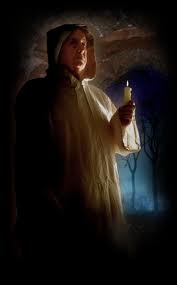
Carthusian Monk
It's worth noting who the Carthusians were. There have of course been many religious orders through the centuries, but the Carthusians are pretty unique by any standards. They are a Roman Catholic religious order, founded by St Bruno in 1084 and set up their first Monastery near Grenoble in France.

A Carthusian Monastery was established in Nottinghamshire in 1343 by Nicholas de Cantelupe in a valley about 10 miles north-west of Nottingham, and called Beauvale Monastery (Priory). This was the third such Monastery to be established in England, with six more to follow.

It was built to hold 12 monks, and a Carthusian Monastery can best be described as a community of hermits. Each Monk had his own living space, called a cell. Each cell had a high walled garden, where the Monk may meditate as well as grow flowers or vegetables as a form of physical exercise. There were also others called 'lay brothers' whose job was to meet the needs of the Monks. Meals were provided through a revolving compartment usually twice a day, with the Monk not having contact with the bearer. These are then eaten in solitude. Theirs is a life of solitude except for community mass, community meal on a Sunday, community walks, and even these are all conducted in silence.

The Carthusian Monks did not engage in work of a pastoral or missionary nature, and as far as possible had no contact with the outside world. They had no concern with anything outside of their monastery; the intention of all Carthusian discipline was to make possible for the Monk contemplation in the fullest sense of that mystic, spiritual beholding of God, called the Beatific Vision. They were gentle people, who simply wanted to be left alone with their beliefs and their lives. But this was not to happen.

Thomas Cromwell
Thomas Cromwell was instrumental in making sure that it did not happen. Born the son of an alehouse keeper, he rose to become, as C.J. Sansom says, "One of the most ruthless and powerful operators ever to dominate the politics of this country. His mastery of the black arts of spin and propaganda, of flattery, patronage and sudden betrayal, make the most ruthless modern politicians seem mild by comparison. He ran a spy network that was the nearest thing a 16th century regime could get to the Stasi, saw off his foes with trumped up charges of adultery and revelled in the torture of his enemies".

He fought as a mercenary in the Italian wars of the early 16th century, and would have undoubtedly come across the works of Niccolo Machiavelli, particularly his book, 'The Prince', which some have described as "one of the most notorious works of all time". This was distributed in 1513, and published in 1532; banned by the Catholic Church, (they accused him of being Satan) but circulated widely. The book is about how power is actually seized and held on to in the world of men. Machiavelli observed that, "A man who strives after goodness in all his acts is sure to come to ruin, since there are so many men who are not good". He also comments that while it is important for a successful ruler to appear honest, merciful and humane, in reality he should eschew these qualities as they will only make him weak. Cromwell seems to have taken the lessons of Machiavelli to heart.

King Henry VIII
Henry became king in 1509, and much of his life and marriages are fairly well known. By his side was Thomas Cromwell, who was always looking for ways to increase power and wealth. He came up with a 'brilliant' plan - destroy the monasteries and seize their vast assets. In a reign of unadulterated terror, he masterminded the dissolution of the monasteries and what one historian called, "The biggest land grab since the Norman invasion of 1066" - seizing one-sixth of the nation's wealth and turning it over to the King.

This reign of unadulterated terror is seen in the story of the Carthusian Monks. This comes about largely as a result of the 1534 Act of Supremacy, where Henry was declared to be the supreme head of the Church of England. Anyone who refused to take an oath recognising him as the head, was considered to have committed an act of high treason.

In 1535, Robert Lawrence, Prior of Beauvale, John Houghton a previous Prior at Beauvale, and Augustine Webster, Prior of Axholme, asked for a personal interview with Cromwell to try and resolve the difficulties. Cromwell refused to listen to them, and sent them to the Tower of London as 'rebellious traitors'. Over the next week they were interrogated by Cromwell, and consistently, and together, refused to take the oath. On the 28th April, they were indicted before a jury on the charge of 'verbal treason'. They pleaded not guilty.

The jury were unable to condemn the accused, on the ground that they did not act maliciously. The Judges instructed them, saying that to deny the supremacy was to act maliciously. The jury still refused to condemn the monks; Cromwell used violent threats against them, until they at last voted guilty. It was reported that afterwards, "they were ashamed to show their faces". So the Monks were condemned to death and taken back to the Tower of London.

On the 4th May the three Priors were executed in the most ghastly of ways. While still living, they were ripped up in each others presence, their bodies obscenely mutilated, their hearts cut out and rubbed into their mouths and faces, and all this before the process of quartering had begun. Six weeks later, three other Carthusians suffered the same fate, and in 1537, a further eleven were convicted, and between May and September, they were tied to a post at Newgate Prison and left to die of starvation. The last to die was in 1540, where at Tyburn he was hanged, disembowelled and quartered. A total of 18 members of the Carthusian Order were tortured and killed for refusing to place their allegiance to the King before their allegiance to the Pope. The Carthusian Order was the only Order that as one, stood against the King and Cromwell. In 1536 the dissolution of the monasteries begins under Cromwell, and was completed in 1539.

Thomas Cromwell fell out of favour with the King, prompted by the jealousy of the Duke of Norfolk, and on the 28th July 1540, he was beheaded at the Tower of London. It is hard to find forgiveness for this 'Prince of Darkness'.

Though more Carthusian Monks were killed who belonged to the London Monastery, I am convinced of the central role played by the Beauvale Monastery in Nottinghamshire, in the incredible confrontation between Church and State, between Monasteries and King, and though they lost the battle, they deserve the recognition, and the promise that their story will never be lost.

Houses of Parliament
It's nearly 500 years since the events surrounding the Carthusian Martyrdom. Cromwell's machiavellian tactics were about the dark arts (the Prince of Darkness); smearing people's names and reputations; greasing people's hands; rewarding people for keeping quiet; encouraging greed in the desire for power; not letting facts get in the way of the truth; in public appear honest and humane, but be quite different in reality; ruthlessly deal with real or perceived enemies. I can't help thinking that this sounds a bit familiar today?